 CKY Home
China Top 10 Hidden Storage Solutions in Custom Furniture
China’s custom furniture industry is reshaping how modern homes use limited space. Behind elegant doors, designers now create practical compartments for everyday living. These Hidden Storage Solutions In Custom Furniture combine visual simplicity with careful planning, durable materials, and precise manufacturing.
This guide introduces China’s top ten hidden storage ideas for bedrooms, kitchens, living rooms, and entryways. Expect lift-top coffee tables, concealed wardrobe drawers, sliding wall panels, under-stair cabinets, and beds with hydraulic compartments. Each solution serves a clear purpose. Shoes disappear beneath a bench. Seasonal blankets rest behind a quiet headboard. Cables remain organized inside a media console.
The selection focuses on real furniture applications rather than attractive concepts alone. We consider space efficiency, opening mechanisms, material quality, installation accuracy, maintenance, and user safety. Experienced Chinese manufacturers often combine CNC production with skilled hand finishing. That balance helps achieve clean edges, stable joints, and consistent dimensions.
Details matter greatly.
A concealed cabinet is only useful when it opens smoothly. A narrow drawer can fail when overloaded. Moisture resistance also deserves attention, especially in kitchens and bathrooms. These points may seem minor, but daily use exposes weak design quickly.
No single storage method fits every household. Some ideas require custom measurements, while others need stronger hardware or more installation time. That limitation is worth admitting. Good design should not hide practical problems. Instead, it should reveal how thoughtful furniture can make small spaces calmer, cleaner, and easier to live in.
What Hidden Storage Means in Custom Furniture
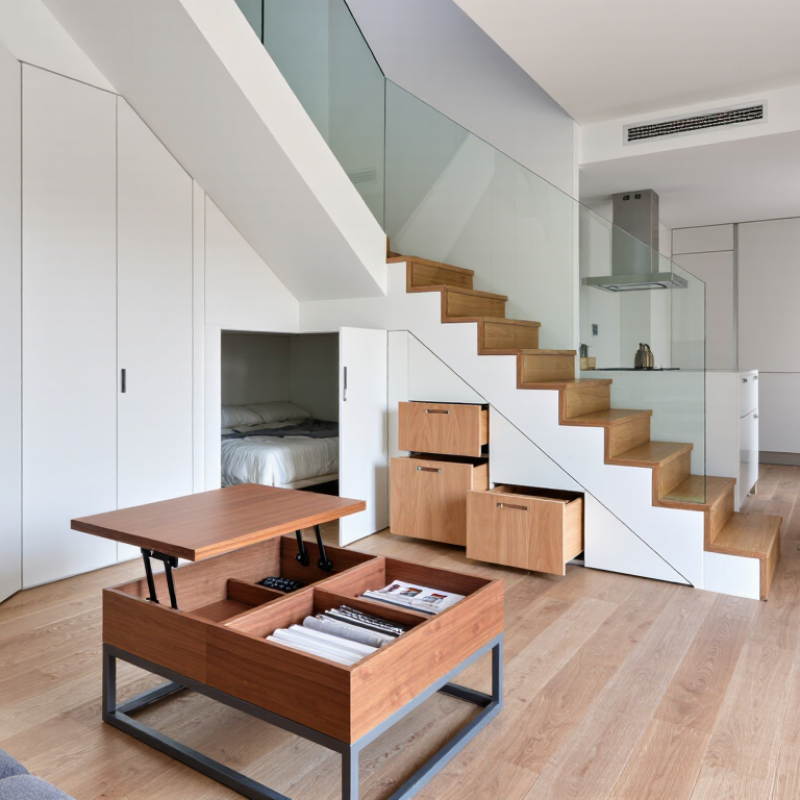
In custom furniture, hidden storage means more than concealing clutter. It is storage integrated into walls, stairs, beds, benches, and cabinet fronts. The goal is visual calm without sacrificing daily access. A flush door beside a wardrobe may hold luggage, while a lift-up bench can store seasonal bedding. Good design makes the storage feel natural, not secretive.
Demand is measurable. The National Association of Home Builders’ What Home Buyers Really Want report identifies a walk-in pantry as an essential or desirable feature for about 61% of buyers. Houzz’s 2024 U.S. Kitchen Trends Study also reports that 76% of renovating homeowners upgraded cabinetry. These figures support a clear direction: storage is becoming a planning priority, not leftover space. In Chinese apartments, where compact layouts are common, custom furniture can turn a 120-millimeter wall recess into a vertical cabinet for cleaning tools or shoes.
Access matters.
Professional designers usually define the user, load, ventilation, and opening angle before selecting hardware. Hidden compartments near kitchens need moisture-resistant materials and easy cleaning. Bed storage should allow safe lifting and prevent finger trapping. Poorly planned concealment becomes frustrating quickly. I have seen elegant panels hide shelves that were too narrow for real objects. That mistake looks refined in drawings, but fails at home. A better approach uses measured belongings, adjustable shelves, concealed hinges, and visible service gaps. Hidden storage should disappear visually, never functionally.
China Top 10 Hidden Storage Solutions in Custom Furniture - What Hidden Storage Means in Custom Furniture
| No. | Hidden Storage Solution | What It Means in Custom Furniture | Typical Application | Suggested Cabinet Depth | Access Method | Space-Efficiency Level | Key Design Consideration |
|---|---|---|---|---|---|---|---|
| 1 | Toe-Kick Drawers | Low-profile drawers are integrated into the unused plinth space beneath base cabinets. | Kitchens, wardrobes, bathroom vanities | 450–600 mm cabinet depth | Front pull-out | High | Keep the drawer front flush with the plinth and allow enough clearance for feet. |
| 2 | Lift-Up Bed Storage | The mattress platform lifts to reveal a large concealed compartment inside the bed base. | Bedrooms, guest rooms, compact apartments | 1900–2200 mm bed length | Gas-assisted lift-up platform | Very High | Use a reinforced frame, safe lifting hardware, and ventilation for stored textiles. |
| 3 | Pull-Out Pantry Cabinet | A narrow vertical cabinet slides forward, keeping food and household supplies hidden behind matching fronts. | Kitchens, utility rooms | 300–600 mm cabinet depth | Full-extension pull-out system | High | Balance the load and use adjustable shelves to reduce tipping and door interference. |
| 4 | Secret Compartment Drawer | A concealed drawer or false-bottom compartment is built inside a larger drawer or cabinet section. | Home offices, bedrooms, entryway furniture | 350–550 mm drawer depth | Concealed push latch or hidden release | Medium | Design the release carefully and avoid using the compartment for hazardous or heavy items. |
| 5 | Mirror Cabinet with Hidden Shelves | A wall mirror functions as a door, concealing shallow shelves behind the reflective panel. | Bathrooms, dressing areas, bedrooms | 100–180 mm internal depth | Hinged or soft-opening mirror door | High | Use moisture-resistant materials in bathrooms and provide adequate wall anchoring. |
| 6 | Bench Seat Storage | A seat cushion or hinged top opens to provide storage inside a built-in bench. | Window seats, dining nooks, entryways | 400–600 mm bench depth | Hinged lid, lift-up lid, or front drawers | High | Include lid stays or soft-close hinges and ensure the seat structure can support regular use. |
| 7 | Sliding Door Wardrobe Compartments | Additional drawers, shoe racks, or accessory trays are concealed behind full-height sliding wardrobe doors. | Bedrooms, dressing rooms | 550–650 mm wardrobe depth | Sliding door system | High | Reserve door overlap and track space so internal drawers can open without collision. |
| 8 | Overhead Cabinet Storage | Storage is integrated above doors, desks, beds, or wall units to use otherwise unused vertical space. | Kitchens, living rooms, home offices | 300–400 mm cabinet depth | Lift-up, hinged, or push-to-open doors | Very High | Secure the units to structural walls and keep frequently used items within safe reach. |
| 9 | Staircase Storage | Drawers, cupboards, or pull-out modules are fitted into the void beneath or beside a staircase. | Entryways, duplex homes, compact residences | Varies with stair geometry | Pull-out drawers or hinged doors | Very High | Preserve the stair structure, maintain safe circulation, and coordinate access with building regulations. |
| 10 | TV Wall Panel Storage | Cabinets, cable channels, and equipment compartments are hidden behind a coordinated decorative wall panel. | Living rooms, media rooms | 250–450 mm cabinet depth | Push-to-open doors or removable panels | Medium–High | Provide ventilation, cable access, and service clearance for electronic equipment. |
Dimensions are typical planning ranges for custom furniture and should be verified against the room layout, user requirements, structural conditions, hardware specifications, and applicable safety standards.
FAQS
It integrates compartments into walls, beds, stairs, benches, and cabinet fronts. The room looks calm, but daily access remains practical.
It uses narrow or overlooked spaces without consuming extra floor area. A 120-millimeter recess can hold shoes or cleaning tools.
Window benches can store bedding. Platform beds can hold luggage, while wardrobe plinths can hide shoes and tools.
Use moisture-resistant materials and surfaces that clean easily. Keep ventilation in mind. Grease and humidity are not minor details.
Lift-up beds need controlled opening and protection against trapped fingers. Test the lifting force with the actual mattress installed.
Measure real belongings before designing shelves. Leave enough width, clearance, and service gaps for cleaning and repairs.
Concealed hinges, push latches, and durable lifting mechanisms are common choices. Alignment must be precise. Small errors show quickly.
A headboard can hold slim compartments. A desk may hide cables, while a staircase can contain pull-out drawers.
No. Some spaces need ventilation, especially near kitchens or damp items. Visual concealment should not block necessary airflow.
A compartment may look elegant but hold almost nothing useful. That failure deserves honest review. Daily convenience matters more than appearance.
Conclusion
This guide explores Hidden Storage Solutions In Custom Furniture, focusing on practical ways to keep living spaces organized, elegant, and clutter-free. It explains what hidden storage means, from discreet compartments and integrated cabinets to concealed drawers and multifunctional furniture. The right design begins with understanding each room’s purpose, available space, daily routines, and the needs of the people using it.
The article presents ten creative storage solutions suitable for bedrooms, living rooms, kitchens, offices, and other areas. It also discusses how to select durable materials, reliable hardware, smooth operating mechanisms, and safe designs, especially where children or frequent use are involved. Finally, it offers guidance on choosing storage that matches the interior style and provides simple maintenance recommendations to ensure long-term performance, accessibility, and visual harmony.
